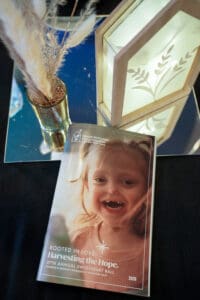
A Winter on the Prairie That Brought an Entire Community Into the Story

Every February, the Sweetheart Ball gathers a room full of people who care deeply about families navigating medical crisis.

But in 2026, Ronald McDonald House Charities of the Red River Valley wanted something more than a beautiful event.

They wanted a story strong enough to carry an entire season.

They wanted it to feel warm, not like a Hallmark card. Elegant, but not cold. And they wanted something that could remind people, in the dead of winter, that hope doesn’t actually go anywhere on the prairie. It just gets quieter.

They called it Winter on the Prairie.

And this time, the story would sit at the center of everything.
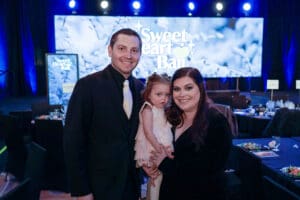
Three Homes. One Lifeline.

At the center of Winter on the Prairie was a little girl named Ella.

Born at 24 weeks while her parents, Nic and Alexa Lundquist, were on vacation in Florida, Ella weighed just one pound, two ounces.

“The doctors told us I wasn’t going to be leaving Florida pregnant,” Alexa shared.

What followed was 308 days in hospitals across three cities: Fort Myers, St. Petersburg, and finally Fargo. Surgeries. Infection. A tracheostomy. Uncertainty.

“At one point, the doctors had us say goodbye to her,” Alexa said.

And then she lived.

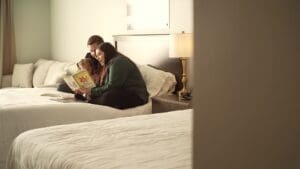
Through it all, the Lundquists found themselves in three different Ronald McDonald Houses.

“Being so close to the hospital gave you a sense of relief and let us worry about Ella,” Nic said.

That line became the emotional anchor of the whole project. Because that’s what RMHC does. It absorbs the logistics so families can focus on love.

The impact film, Three Homes, One Lifeline, became the heart of the entire ecosystem. Not just a video played at the event, but the emotional current running through every touchpoint.

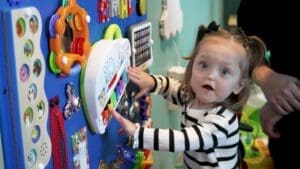
Ella wasn’t framed as fragile. She was sassy. Energetic. Bossy.

“What she lacks in size, she makes up for in spunk and energy,” Nic laughed.

This wasn’t a tragedy story. It was a resilience story. A rural North Dakota story. A farm family navigating impossible odds with the support of community.

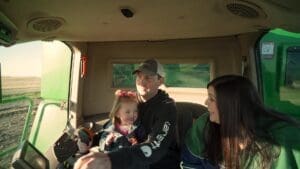
Three years later, she’s honking the combine horn on her family’s farm.

That’s the whole story, really.

Building an Ecosystem Around the Story

The theme shaped every piece of the visual system.

Frosted textures. Wide horizon lines. Icy blues and muted maroon. Gold on white treatments that felt elegant but grounded. Wheat silhouettes instead of snowflakes. Harvest light instead of holiday sparkle.

The Sweetheart Ball logo structure carried forward from 2025, but the star field disappeared. In its place: quiet prairie strength.

From there, the ecosystem unfolded: a Save the Date postcard, invitation and envelope suite, event program, live and silent auction insert, social media assets, sponsor ad guide, family story summary, Giving Hearts Day package with personalized mail merge capabilities, and a separate Annual Report PDF built to live beyond the event.

Each piece pointed back to the same truth. Warmth in the winter. Home on the prairie.

The event program returned to its core purpose: guiding the evening. Ads were simplified. The family story was focused and concise. The larger Annual Report would live separately, giving the Ball room to stay centered on connection rather than coverage.

Giving Hearts Day aligned with the film’s emotional arc. Postcards and emails were customizable, built so names and past gift data could shape the message. Not mass outreach. Personal.

Because when you’ve heard Nic say, “I can’t explain how much it means to have a place like this,” you don’t send generic asks. You invite people in.

Announcing the Future Without Losing the Present

There was another layer to hold carefully.

A global RMHC rebrand was coming in summer 2026. But for Sweetheart Ball, the current brand stayed. No visual rollout yet. The shift would be announced verbally, honoring what had been built while inviting the room into what’s next.

That restraint mattered. It preserved consistency for longtime supporters while positioning RMHC for growth. Change was coming. It just wasn’t their change to announce yet.

What the Night Produced

The night came together. Not in a “everything went perfectly” way, but in the way where the room felt like it understood what it was there for. That’s harder to pull off than it sounds.

Sponsors had clear assets. Guests moved through a refined, focused environment. The program did its job without getting in the way. Giving Hearts Day finally had something to say instead of just something to send.

And at the center of it all, Ella, running across the prairie, very much alive, reminded the room why this House exists.

Because in rural communities, distance to care can feel impossible. But home changes everything.

What This Set in Motion

Winter on the Prairie did more than drive attendance. It separated the event from the annual report, which sounds like a small thing and isn’t. Giving Hearts Day had a real story to build from. The rebrand, when it comes, has a foundation to land on instead of a void.

Most importantly, it reminded supporters they are not funding a building.

They are giving families the ability to focus on what matters most.

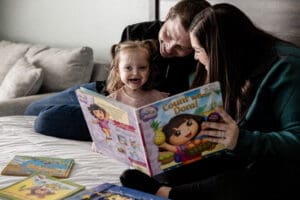
“They still get to be a child,” Alexa said. “They aren’t stuck in a hospital room.”

That’s what the Sweetheart Ball made visible. A room full of people. A prairie in winter. A little girl who wasn’t supposed to make it.

And a House that ensures hope always has a place to land.

Ready to make an impact? 

Contact Us